Overview
Master’s thesis research at KAIST exploring attentional control methods for time-series data classification and synthesis. This work investigated how attention mechanisms can improve deep learning models’ ability to process sequential data, with applications in neuroscience and signal processing.
Key Achievements
- Publication: Oral presentation at IEEE SMC 2018
- Developed novel attention-based approaches for time-series classification and synthesis
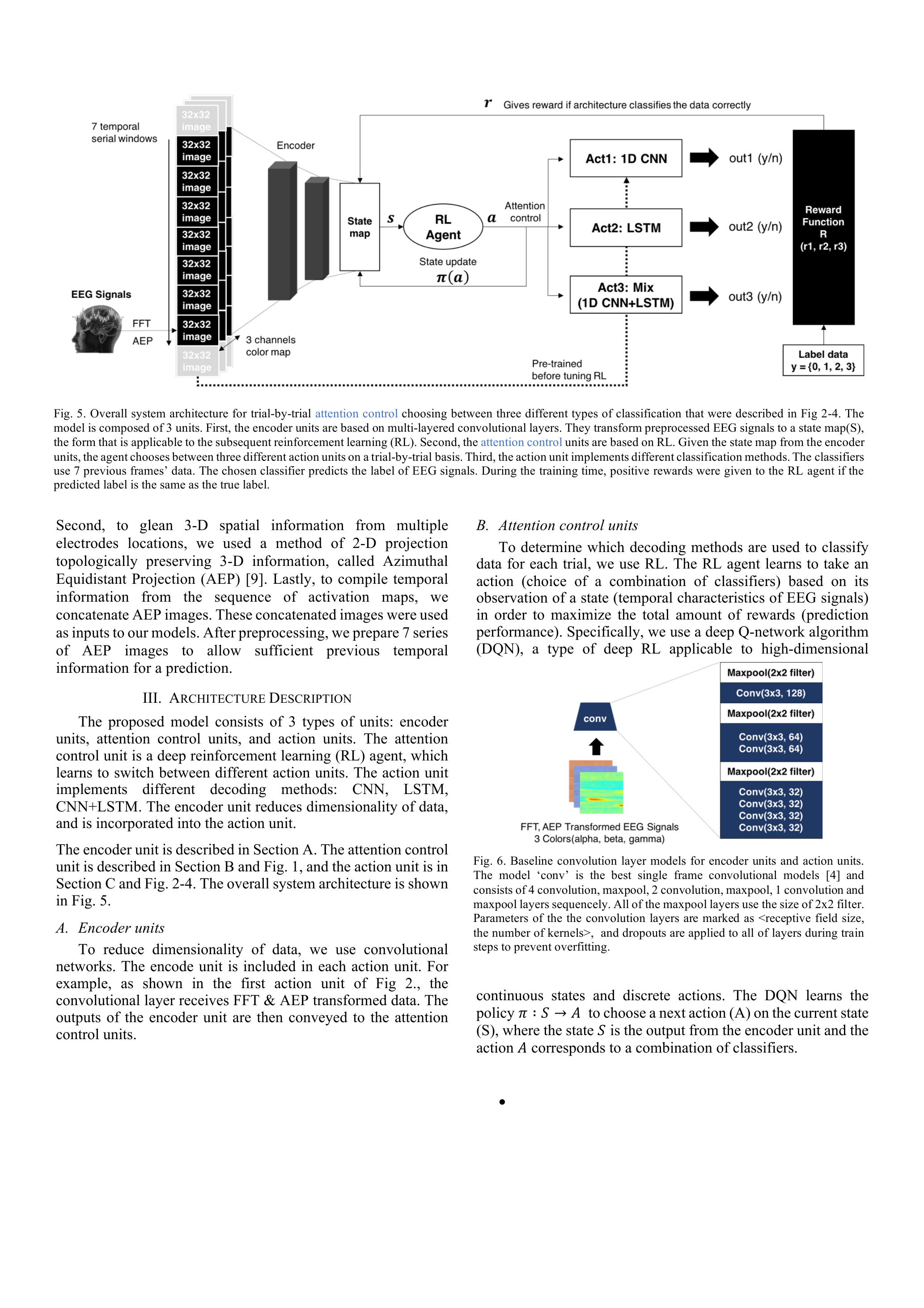
- Applied reinforcement learning for adaptive EEG signal processing
- Solved the memory-based vs. memoryless trade-off problem
Technical Approach
EEG Signal Classification
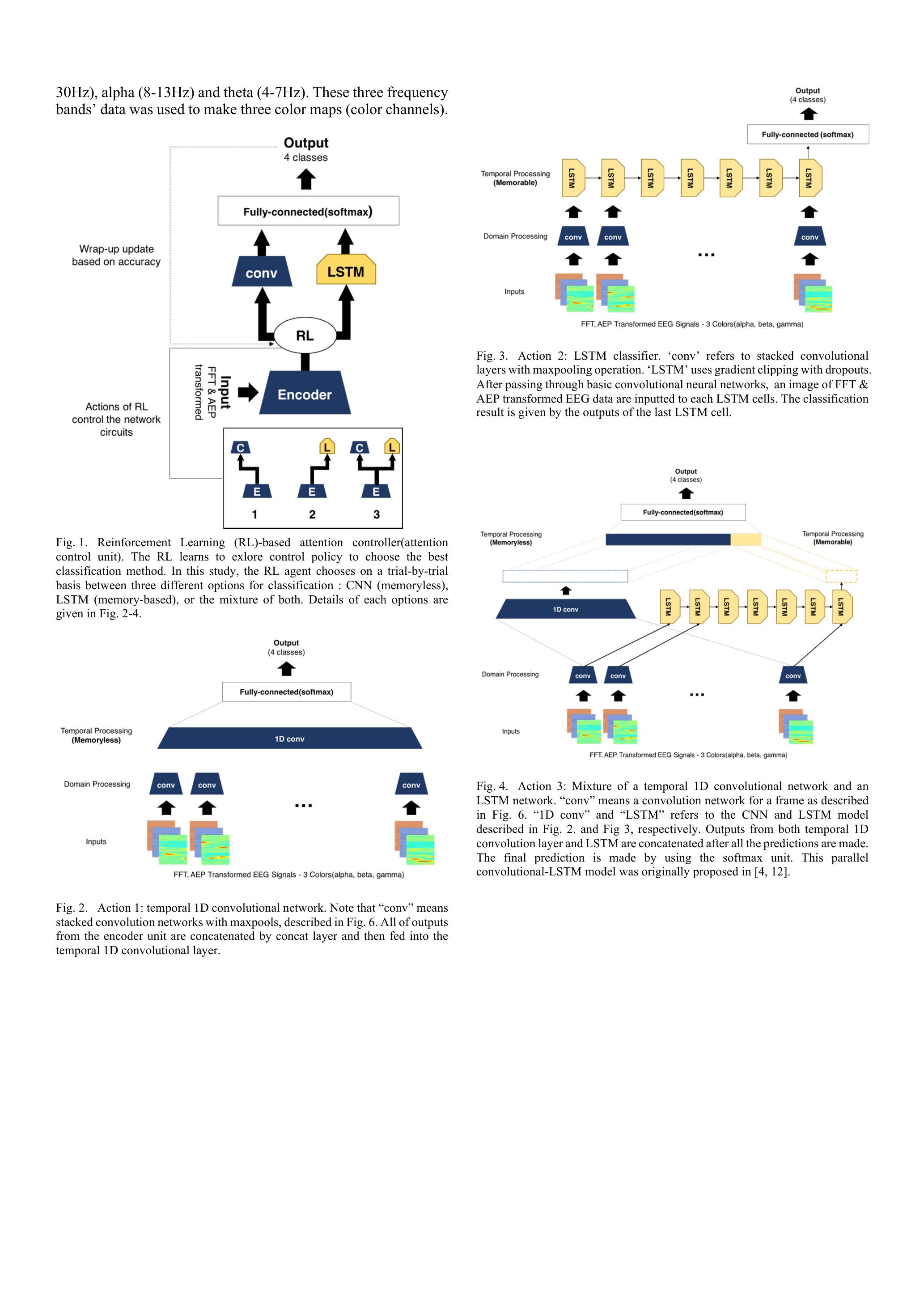
Applied reinforcement learning for adaptive EEG signal processing, addressing the memory-based vs. memoryless trade-off problem. This approach enables the model to dynamically decide when to rely on historical context and when to focus on current observations.
Attention Mechanisms for Sequential Data
Investigated how attention can focus on relevant time steps in sequential data, balancing model capacity with interpretability. Applications span neuroscience and signal processing domains.
Tech Stack
- Deep Learning: LSTM, Attention Mechanisms
- Signal Processing: EEG Analysis, Time-Series Processing
- Frameworks: TensorFlow, PyTorch
Period
March 2017 - February 2019
Impact
This foundational research in attention mechanisms laid the groundwork for later work in multimodal AI and sequential modeling, including knowledge tracing and recommendation systems.
Publications
- Jungbae Park, Sang Wan Lee - “Solving the Memory-based-Memoryless Trade-off Problem for EEG Signal Classification” (IEEE SMC 2018, Oral)
Thesis
- Title: “Attentional Control Methods for Time-series Data Classification and Synthesis”
- Advisor: Prof. Sang Wan Lee
- Institution: KAIST, Lab for Brain and Machine Intelligence